

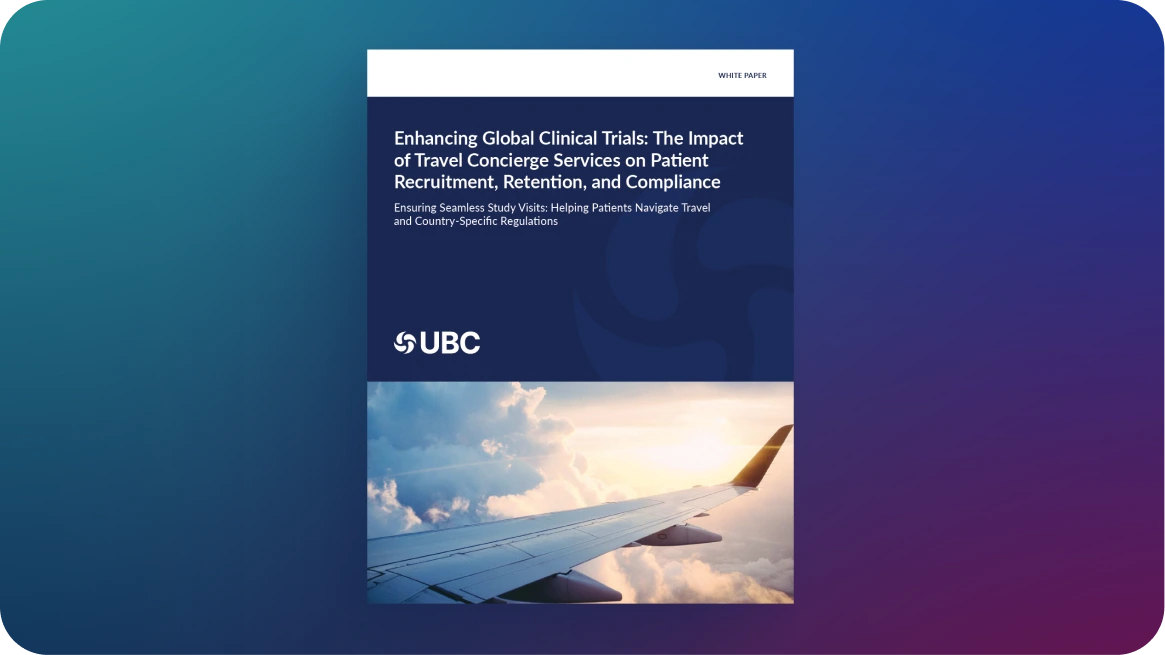
Travel concierge services are increasingly vital to the success of clinical trials, especially in global clinical trials. By removing barriers such as transportation challenges, travel costs, and logistical complexities, these services ensure that all patients have equitable access to study opportunities.
Travel as a Barrier to Clinical Study Participation
Studies show that approximately 30% of potential participants decline to join studies because of travel-related concerns.
- The burden of clinical travel rose from 29% in 2019 to 44% in 2021. The 2023 “Perceptions & Insights Study” by The Center for Information and Study on Clinical Research Participation (CISCRP), confirmed that travel to a study site is still the most disruptive part of clinical study participation for patients.
- Travel-related concerns include long distances, lack of adequate transportation, and high personal costs.
- For studies conducted across multiple countries, participants must often navigate a web of visa regulations, medical documentation, and quarantine protocols.
These barriers are especially crucial to overcome for trials involving rare diseases, pediatric populations, or remote regions where accessibility is limited.
Strategies for a Comprehensive, Patient-Focused Program
To create a successful program, anticipate and plan for patient and caregiver needs:

Offer Flexible Options
Provide diverse support, including:
- Private and ambulatory supported transportation
- Domestic and international flights
- Hotel accommodations
- Childcare, elder care, and travel coverage for caregivers

Simplify Financials
Use preloaded debit cards for travel costs and incidentals

Ensure Support
Offer 24-hour travel service support
Regulatory Guidance: A Critical Consideration
To make travel services seamless for sites and patients, specific nuances and restrictions by country must be followed. Investigational Review Board (IRB) or European Commission (EC) approval needs to be obtained first, followed by a signed consent by patients.
In the US, the FDA does not consider reimbursement for travel expenses to and from the clinical study site, and associated costs such as airfare, parking, and lodging, to raise issues regarding undue influence, provided that the payment amount is not so much that it may create an undue influence (1). Other countries vary in their restrictions and requirements. As these regulations are continually evolving, it is critical to engage with an experienced partner who understands issues across borders.

UBC’s Travel Concierge Services for Patient Support
UBC’s Concierge Patient Transportation and Expense Reimbursement Services offer a comprehensive solution to these challenges. By managing every aspect of travel coordination and expense reimbursement processing, these services alleviate the burden of participation.
For sponsors, these services help ensure timely patient participation, better retention, and improved protocol adherence. This approach can also reduce dropout rates by up to 30%, helping to avoid the thousands of dollars typically associated with recruiting and onboarding replacement patients (2).
Enhance Clinical Trials: Boost Recruitment, Retention, and Compliance
Travel concierge services remove barriers (transportation, costs, logistics) to ensure equitable access to global clinical trials. Download the full white paper for insights on patient travel barriers, UBC’s benefits, partner standards, and regulatory guidance.
References
- Office of the Commissioner, Office of Clinical Policy and Programs, Office of Clinical Policy, Office of Good Clinical Practice, Payment and Reimbursement to Research Subjects, Guidance for Institutional Review Boards and Clinical Investigators, January 2018
https://www.fda.gov/regulatory-information/search-fda-guidance-documents/payment-and-reimbursement-research-subjects - The True Cost of Patient Drop-outs in Clinical Trials, Oct, 1, 2020
https://mdgroup.com/blog/the-true-cost-of-patient-drop-outs-in-clinical-trials/