


Integrated Evidence Generation Strategy
Optimizing Evidence Generation Strategies Across Product Lifecycles
Multi-disciplinary teams developing integrated evidence generation plans to drive market access and adoption, communication strategy, and regulatory compliance.
Develop an Integrated Evidence Road Map
Comprehensive approach to evidence generation that addresses key stakeholder needs in a dynamic market landscape
UBC simplifies the complexities of strategy development by creating an integrated evidence generation road map that will position your product for success.
UBC’s consulting team develops integrated evidence generation strategies that support the entire product lifecycle. Our multi-disciplinary team, comprised of strategists, research scientists, epidemiologists, data scientists, technologists, and HEOR experts, partners with you to design highly customized strategies based on stakeholder requirements and a dynamic landscape. We harness these insights to optimize your evidence generation roadmap to ensure your treatments are reaching the patients who need them.
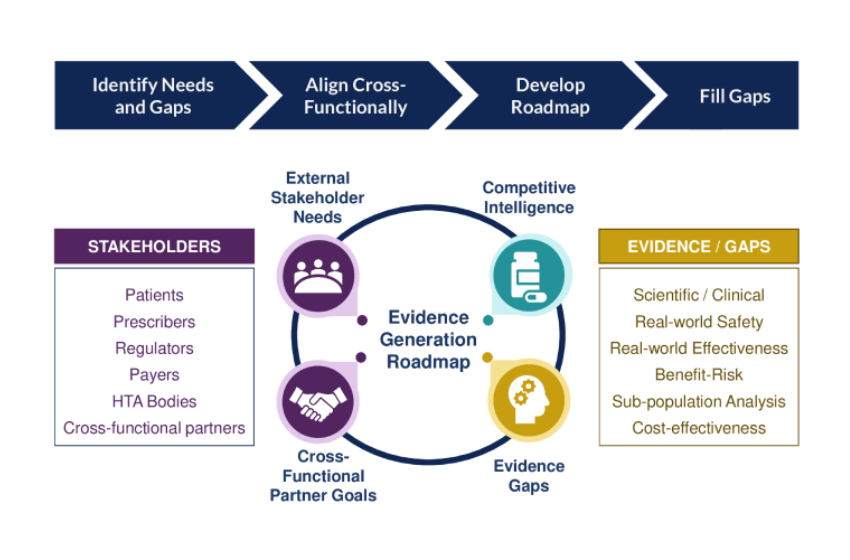
Integrated Evidence Generation Roadmap
The evidence needed for product success is dependent upon the needs of external stakeholders and internal partners. Understanding the competitive, scientific/clinical, regulatory, and market access landscapes is crucial to identifying knowledge gaps. Once gaps are identified, a strategy can be designed to generate the evidence needed to demonstrate value and satisfy stakeholders across the product lifecycle.

Our Specialties
Realizing the full potential of real-world evidence to enable smarter decisions and drive better patient outcomes requires robust, modernized study design. Our integration of real-world evidence strategy, modern real-world technology, and streamlined data infrastructure expands recruitment, improves the patient experience, and accelerates research.
Our Integrated Evidence Generation Consulting Services
Expert strategic planning
We recommend and prioritize opportunities and actions that enhance your product’s value, while building real-world evidence strategies that meet the expectations of patients, regulators, and other stakeholders.
External stakeholder needs and landscape assessment
- Competitive landscape analyses
- Regulatory landscape analyses
- Targeted literature reviews
- Payer landscape analyses & perspectives
- Patient, care partner, and provider perspectives



Frequently Asked Questions
What is an integrated evidence generation strategy?
It’s the road map that defines what evidence a product needs to demonstrate, to whom, and under which regulatory and value frameworks — before any individual study is designed. UBC’s strategy work aligns clinical, regulatory, payer, and patient evidence needs into a single plan, so studies are built to answer real decisions rather than to fill data gaps after the fact.
When is the right time to engage UBC for this work?
Earlier than most sponsors think. The strategic choices that shape evidence — which questions get asked, which stakeholders get addressed, which data sources are used — are easier to set than to retrofit. Sponsors typically engage around mid-Phase II, ahead of late-stage protocol decisions, but the work is also valuable at any inflection point: post-approval expansion, label extension, HTA submission planning, or a launch refresh.
What's the difference between strategy and study planning?
Strategy comes first and defines the questions; study planning operationalizes them. UBC’s strategy team identifies competitive, regulatory, payer, and patient knowledge gaps, prioritizes what needs to be answered, and recommends how — including which evidence designs would actually answer each question. The studies themselves get designed and executed by the Modernized Study Design and Late-Stage Research teams downstream.
Who's on the team that develops this strategy?
The consulting team is intentionally multi-disciplinary: strategists, research scientists, epidemiologists, data scientists, technologists, and HEOR experts working together. The mix matters because integrated evidence sits at the intersection of regulatory, clinical, commercial, and access decisions — and no single discipline can shape that view alone.
What deliverables come out of the engagement?
External stakeholder assessments (competitive, regulatory, payer landscape analyses, targeted literature reviews, patient and provider perspectives), internal strategic alignment outputs (cross-functional strategy analyses, alignment and prioritization workshops), and tailored strategic positioning (evidence generation roadmaps, scientific and clinical value stories, payer value propositions). Most engagements pick the components that match the decision a sponsor is making.
How does this connect to the studies we eventually run?
Directly. The roadmap defines the questions; the modernized study design and late-stage research teams build the evidence to answer them. The advantage of running both inside UBC is continuity — the people who shaped the strategy are part of the conversation when trade-offs need to be made during execution, rather than handing a document to a separate vendor.
How is success measured for a strategy engagement?
Through the decisions it enables. A good integrated evidence strategy lets a sponsor commit earlier and more confidently to study designs, data sources, and stakeholder narratives; reduces duplication across regulatory and payer evidence; and provides a defensible answer when the next stakeholder asks ‘why this study, why now?’ The work is typically scoped as a fixed engagement with specific deliverables, with the option to continue into execution.
Learn More About UBC's Evidence Development Solutions
Interested in learning more about how UBC’s integrated evidence generation strategy can help you unite evidence and access to inform complex decisions?