

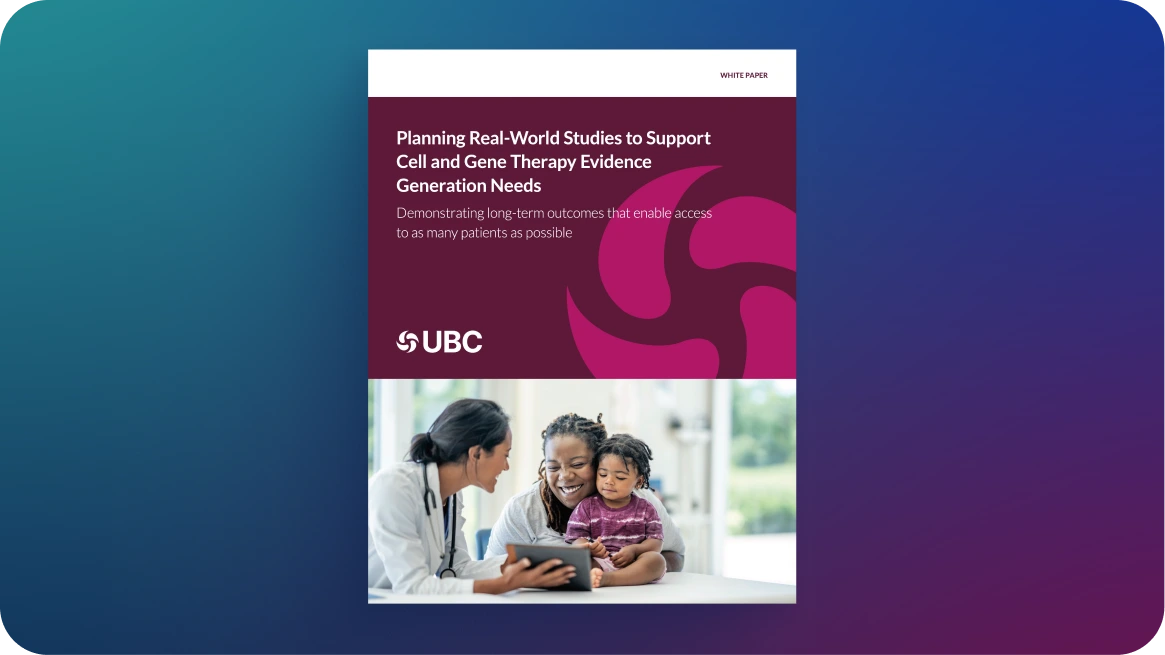
Cellular and gene therapies (CGTs) offer a personalized approach to medicine for patients who previously had few or no options, including those with rare diseases, genetic disorders, and cancer. With over 2,000 CGT clinical trials globally, sponsors must demonstrate long-term outcomes to satisfy patients, providers, regulators, and payers (1).
Real-world data (RWD) and real-world evidence (RWE) are critical strategic tools to overcome the unique complexities of CGT studies.
CGT Study Challenges Addressed by RWD/RWE
1) Patient Recruitment: CGTs generally treat small patient populations that are geographically dispersed. These patients may find it difficult to find clinical trials that specifically target their health status.
The Solution: RWD sources (e.g., Electronic Health Records (EHRs), medical claims, and disease registries) can be used to identify and geographically locate patients matching study criteria for targeted digital outreach.
2) Direct Comparators: CGTs often treat patient populations for which there are no therapeutic alternatives or known natural history information, making it challenging to establish appropriate outcomes. It may be unethical to utilize placebo controls in these populations.
The Solution: RWD is a primary data source for constructing historical control datasets to supplement or replace control arms for clinical studies. Using prospective natural history studies is another approach to obtaining comparative data that can be used as an external control group for regulatory submissions.
3) Long-Term Follow-Up (LTFU) Commitments: The FDA and EMA require post-marketing surveillance activities to establish real-world effectiveness and safety for CGTs.
The Solution: Registries (newly initiated prospective or integrated) can be designed to collect data on standard of care practice and monitor the safety and effectiveness of therapeutics, strengthening the evidence base for long-term follow up.
3) Access & Value: The lack of strong evidence for effectiveness of CGTs combined with the high cost of these therapies creates affordability issues for payers.
The Solution: Strategic incorporation of RWE from post-approval clinical use (e.g., from registries, EHRs) provides additional data to support therapeutic effectiveness. Resulting RWE can help to reduce payer uncertainty, allowing for coverage strategies like conditional reimbursement or outcomes-based models.
Integrated RWD/RWE Strategy for Cell & Gene Therapy Value
UBC’s Executive Director of Real-World Study Solutions Judy Lytle and Executive Director of Clinical Research Bruce Smith discuss how early strategic RWE planning helps identify RWD sources, design comparator studies, and overcome complex patient challenges (recruitment, LTFU) to demonstrate product value for regulators, payers, and health technology assessment (HTA) bodies.
References
- Alliance for Regenerative Medicine. Cell and Gene Therapy Sector Data. https://alliancerm.org/data/. Accessed 07/28/2023.