

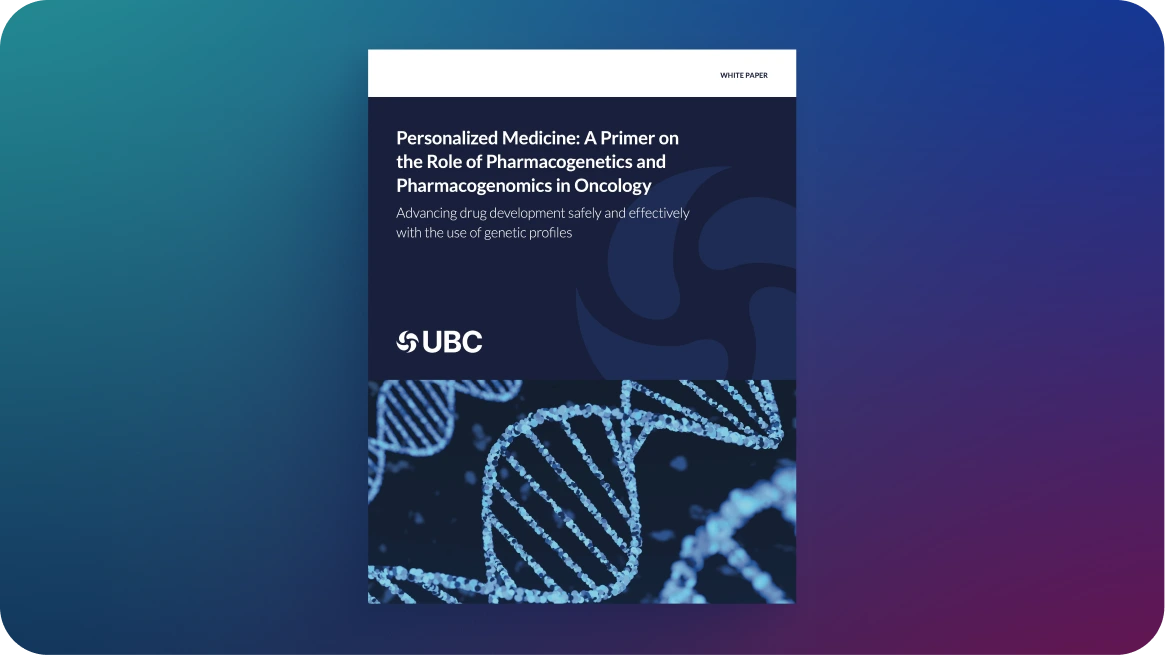
Download our white paper to understand how advancements in genomics are transforming cancer treatment and drug safety. Adverse drug reactions (ADRs) are the fourth leading cause of death in the United States. Following the Human Genome Project and the International HapMap Project, scientists are now leveraging variations in human and tumor genetics to guide the development of targeted therapies and new drugs that are safer for patients. Pharmacogenetics and pharmacogenomics have evolved from these advances impacting the development of screening tools, diagnostics, and targeted therapies.
This report provides a primer on:
- Recent advances and applications of pharmacogenetics and pharmacogenomics
- The positive impact of these fields on drug development
Key Topics
The white paper explores how personalized medicine is applied to:
- Molecular targeting: Informing the development of specific small molecules or biologics for targeted therapies, such as seen with HER2/neu expression in breast cancer (1)
- Diagnosis and screening: Utilizing high throughput genetic screening and microarrays for earlier, more accurate diagnosis
- Treatment and benefit/risk analysis: Understanding how mutations in drug metabolism systems (like Cytochrome P450) and transport systems (like P-glycoprotein) impact drug efficacy and the risk of serious ADRs
- Protocol design: Demonstrating how genotyping can result in smaller sample sizes and reduce risk during clinical trials
- Standard of care: Supporting pharmacogenomic testing as a standard of care to ensure patient safety
Unlock the Future of Oncology with Expert Insights
UBC’s Don Gabriel, MD, PhD and Judy Lytle, PhD, MBEE, PMP discuss personalized medicine, applications of pharmacogenetics and pharmacogenomics in oncology and the positive impact they have on drug development.
References
- Griffin, R, and Ramirez, RA. Molecular targets in Non-Small cell Lung Cancer. Ochner J. 2017. 17:388=392.