
pharmacovigilance consultancy services

The first PV decisions you make can either accelerate your programme - or delay it.

Choosing the right database. Writing SOPs. Hiring your first PV lead. The decisions you make now are much harder to undo later. UBC helps emerging biotech companies make those decisions with confidence - bringing experienced PV leaders alongside your team before small decisions become bigger problems.

We’re ready to engage within five business days.

170+

PSMFs authored, maintained or updated across global programmes since 2021

40+

client audits and inspections supported annually

90+

countries covered for safety regulatory intelligence

14+

years’ experience writing PSMFs

Talk to a PV leader

By submitting, you agree to our privacy policy. We'll never share your information.

Great! We’ve received your information.

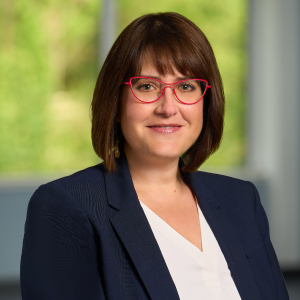
“The teams we work with are moving quickly because they have to. Investors are watching. Milestones matter. Every decision counts. Our job is to make sure pharmacovigilance enables progress, not slows it down.”

Tom Coles

Director - Pharmacovigilance

Services

The moments that bring
people to us

The pressure is rarely caused by not knowing there’s a problem. It’s caused by not knowing how serious it is or what happens if it’s left alone.

That’s usually when the phone rings.

building

“Our IND has been approved and we need a safety database in the next eight weeks.”

Creating a safety function isn’t about doing everything at once. It’s about making the right PV decisions early, before they’re difficult, or expensive, to change.

Where we typically help

  • PV operating model design
  • Safety database selection
  • SOP development
  • Governance framework design
  • First safety hires and capability planning

SUBMISSION

“Our first submission is three months away and we’re finding gaps we thought we’d already solved.”

Submission rarely creates problems. It reveals them. The closer you get, the harder they are to revisit. That’s why we help teams spot pressure points while there’s still time to act.

Where we typically help

  • Submission readiness
  • PSMF development
  • Regulatory compliance reviews
  • Inspection preparation
  • Process validation

OUTSOURCING

“We’re making our first PV hire. Do we recruit, outsource, or both?”
There’s rarely a single right answer. Some capabilities belong in-house. Others are better delivered by people who’ve done them many times before. Knowing where to draw that line is often the hardest part.

Where we typically help

  • Operating model advice
  • Vendor selection
  • Governance and oversight
  • Transition planning
  • Interim leadership

GROWTH

“We’ve just licensed a second product and everything suddenly feels more complicated.”

Growth changes what’s expected of your safety function. New markets, more data, more oversight. Planning for that next chapter saves a lot of rebuilding later.

Where we typically help

  • Scale-up planning
  • Global PV frameworks
  • Aggregate reporting
  • Signal management
  • Risk management planning

INVESTMENT

“Our lead investor asked who our QPPV is. We don’t have one.”

That’s usually a good sign.
As the business grows, investors want confidence that the science is supported by a safety function that can grow with it.

Where we typically help

  • PV health checks
  • Gap assessments
  • Due diligence support
  • Governance reviews
  • Executive advisory

FIRST INSPECTION

“We’ve just received our first inspection notice. Where do we even begin?”

Every company has a first inspection. Very few have to face it alone. Experience changes the way teams prepare, the questions they ask, and the confidence they bring into the room.

Where we typically help

  • Mock inspections
  • PSMF review
  • QPPV coaching
  • CAPA planning
  • Inspection support

Designed to grow with you.

The best partnerships aren’t measured by how long they last, but by how well they prepare you for what’s next. Whether you need a fully outsourced safety function today or an in-house team tomorrow, everything we do is designed to make that transition straightforward.

Designed for your next milestone

You don’t need every capability on day one. We help you put the right foundations in place for where the business is now – while keeping an eye on where it’s going next.

Senior experience before you can justify hiring it

Hiring an in-house team takes time. Until then, our consultants become an extension of yours – bringing leadership, judgement and practical experience exactly where it’s needed.

Designed to transfer

Processes, governance, documentation, and ways of working shouldn’t disappear when a consultancy leaves. They should become part of your business, giving your own team a platform to grow from.

Here for every milestone

Some clients need us through a submission. Others through launch, growth, or the transition to an internal team. However the relationship evolves, you’ll always know what we’re doing, why we’re doing it, and what success looks like.

Three ways to engage

Support that grows with you.

Most growing biotech companies don’t need every pharmacovigilance capability from day one. Some need help creating the right operating model. Others need experienced leadership through a specific milestone. Many need a partner who can adapt as the business evolves.

However you choose to work with us, you’ll know what’s included, what success looks like, and how the engagement can evolve over time.

Ongoing Partnership

Foundation Project

Embedded Expertise

Best For

Best For

Growing companies that want experienced PV leadership alongside their team

Best For

Putting the right foundations in place without creating unnecessary complexity

Best For

Key milestones where additional leadership or specialist expertise is needed

Typical situations

Typical situations

Governance, strategic planning, scaling, regulatory support

Typical situations

PV operating model, SOP development, database selection, first submission planning

Typical situations

Launch readiness, inspections, remediation, organisational growth

Time to start

Time to start

Typically starts within five business days

Time to start

Typically starts within five business days

Time to start

Based on availability and scope

Deliverables

Deliverables

Agreed advisory cadence

Deliverables

Defined upfront

Deliverables

Dedicated senior resource

Outcome

Outcome

Ongoing strategic support

Outcome

Clear scope, timeline and endpoint

Outcome

Embedded leadership and execution support

case studies

Experience in practice

Oncology / Advanced Therapies

Global PV Training Programme

A global PV team needed a clearer understanding of evolving EU GVP requirements.

  • Strengthened understanding across geographically distributed teams
  • Improved alignment with evolving regulatory expectations
  • Enhanced inspection readiness and compliance awareness

Oncology / Rare Disease

Global PV System Design

A growing biotech required a scalable PV framework capable of supporting increasing regulatory obligations.

  • Established a structured global PV operating model
  • Defined governance, accountability, and data management processes
  • Created a framework capable of supporting continued growth

Ophthalmology / Medical Device

PV Framework Build

An organisation with limited internal infrastructure needed a compliant foundation for PV operations.

  • Implemented a fit-for-purpose SOP framework
  • Reduced compliance risk through defined ownership and workflows
  • Improved readiness for future regulatory scrutiny

FAQS

Early conversations usually focus on the same few questions.

What's included in UBC's full-service pharmacovigilance offering?
UBC’s full-service model covers the day-to-day operation of a pharmacovigilance function – from safety database management and case processing through to signal detection, literature screening, safety writing, regulatory intelligence, and global submissions. We also provide QPPV services, PSMF management, EudraVigilance support, and local PV leadership across Europe. Around 70% of UBC clients choose this fully outsourced model.

Both. For many emerging biotechs, UBC operates as the safety function itself – helping make hiring decisions, author SOPs, select safety databases, and build the processes needed to scale as adverse event volumes increase through development. For larger sponsors, UBC more often supports a defined area such as case processing, aggregate reporting, or signal management alongside internal teams. The right model depends on how the function is structured and where accountability sits.

By being clear about where each model fits. Offshore teams are well suited to high-volume, lower-complexity case processing where speed and cost are the primary drivers. UBC’s full-service model is built for therapies where adverse events are clinically serious, the case mix is more complex, or the science is still emerging – including rare disease, cell and gene therapy, oncology, paediatrics, and psychedelics. We work with offshore partners where it makes sense, but most sponsors are paying for judgement at intake and during signal review, not data entry.

UBC operates a fully cloud-based Oracle Argus environment, supported by validated tools for literature screening, signal detection, and regulatory submissions. Automation helps reduce manual handling and shorten triage times, allowing teams to focus attention where judgement matters most. The technology is consistent with industry standards. The difference is the expertise behind it – the people making decisions, identifying risks, and ensuring the work stands up to scrutiny.

UBC combines aggregate-level signal detection with case-by-case clinical review to identify potential safety concerns, assess their significance, and determine when further investigation or regulatory action may be needed. Our approach aligns with FDA guidance, EMA GVP Module IX, and CIOMS VIII, drawing on broad data sources and appropriate patient populations to ensure signals are interpreted in the right clinical context.

From 2018 through Q2 2025, UBC supported 30 regulatory inspections with no critical findings. More than 99% of regulatory submissions are delivered on time, across 70,000+ cases processed annually. Those numbers reflect something important: systems perform better under scrutiny when they’re shaped by experienced people from the start, not assembled under pressure.

UBC prepares PADERs, PSURs, PBRERs, and DSURs throughout the product lifecycle – from the more frequent reporting required for new therapies through to annual reporting as the safety profile becomes better understood. The work is led by clinicians with advanced degrees, with a focus on reports that tell a clear benefit-risk story rather than simply restating the data.

You don’t need a fully defined scope or a statement of work.

Start with the challenge, the question or the concern that’s prompting the conversation. We’ll help you determine whether action is needed, where the priorities sit and what a practical response looks like.

A senior member of the UBC consulting team will respond within 1 business day.

Talk to us

©2026 United BioSource LLC, all rights reserved

UBC logo white

Thank You for Connecting with UBC

.


What You Can Expect Next

.

UBC logo white

Get Ready to Change Your Business

.

Service Request

Bekki Bracken Brown Headshot

Bekki Bracken Brown

President & Chief Executive Officer

Bekki Bracken Brown serves as the President and CEO of UBC, guiding the company’s mission and values, including the improvement of access for patients to receive better outcomes. She oversees all aspects of UBC, such as operations, business growth strategy, sales and marketing, and acquisition support.

With over 20 years of industry experience, Ms. Brown brings knowledge from a successful career in senior management from her tenure at Quintiles, INC Research, and, most recently, with Syneos Health. She’s been a member of the North Carolina BIO Board of Directors since 2019. She is also a member of the Healthcare Businesswomen’s Association — Southeast Chapter and CHIEF, an organization that supports women executive leaders. Ms. Brown earned her bachelor’s degree at Duke University.