


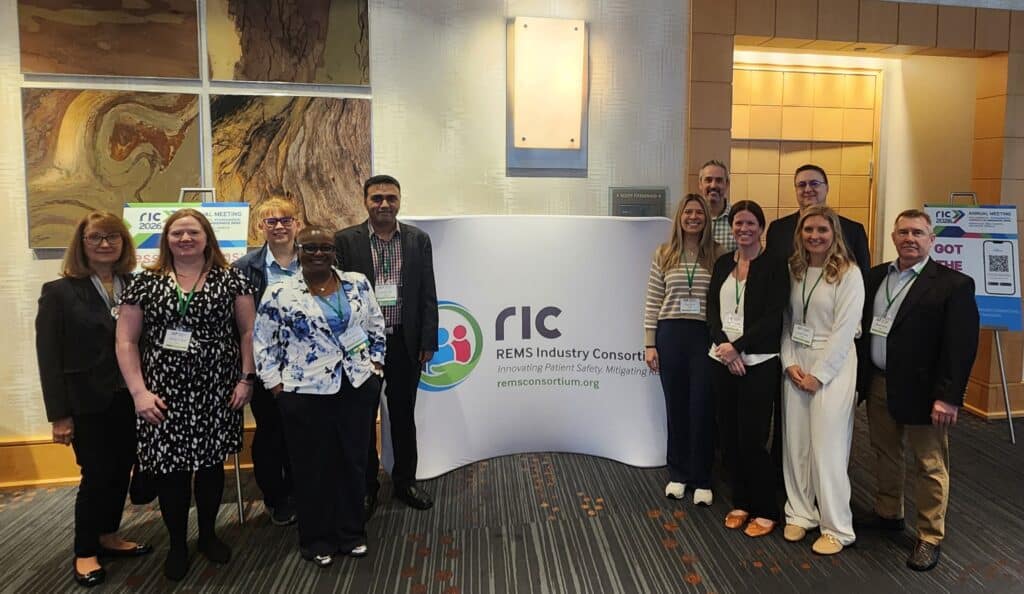
The 2026 REMS Industry Consortium (RIC) Annual Meeting took place on March 11–12, in Arlington, Virginia, bringing together manufacturers, current and former FDA insiders, and vendors, along with pharmacy, distributor, and healthcare setting (HCS) representatives from across the Risk Evaluation and Mitigation Strategies (REMS) ecosystem—creating a valuable forum to reflect on the current state of REMS and explore what lies ahead.
Three Themes Shaping the REMS Landscape
Across sessions and conversations, three clear themes emerged:
leveraging artificial intelligence (AI) in REMS, advocating for greater harmonization and standardization, and navigating an evolving regulatory landscape.
Leveraging AI to Drive Innovation and Efficiency
As in many industries, AI was a central topic throughout the meeting. While AI holds significant promise for enhancing efficiency and innovation within the REMS space, discussions underscored the importance of implementing solutions that are thoughtfully designed, incorporate human‑in‑the‑loop processes, and prioritize regulatory compliance and data privacy at every stage.
Identifying Areas for Standardization in REMS
The diverse perspectives at the meeting enabled meaningful collaboration around shared challenges. Key REMS stakeholders such as Healthcare Settings (HCSs), Specialty Pharmacies (SPs), and Wholesaler-Distributors (WDs) all presented echoing the same common thread – the importance of standardizing processes to simplify workflows and increase compliance. UBC has already made strides in this area with the implementation of the UBC REMS API Data Exchange (UBC RAPID), which standardizes pharmacy REMS verification and dispensing processes within the pharmacy management system (PMS). Additional pain points raised by HCSs and WDs surrounded audits, data exchanges, and multiple location certification. The stakeholder challenges discussed at RIC provide invaluable insight into the real-world impact of REMS. UBC is already brainstorming and using this feedback to propel REMS processes forward with innovation to reduce burden on REMS stakeholders.
Regulatory Perspectives and Opportunities for REMS Optimization
Another highlight of the meeting was the opportunity to engage with current and former FDA insiders on the evolving regulatory environment. While the recent release of several REMS programs was top of mind for some attendees, experts emphasized that not all REMS will ultimately be released. They encouraged manufacturers to consider whether data generated outside of REMS, such as real‑world evidence or claims analyses, could support proposals for modifications to lessen REMS requirements. When feasible, this approach may help reduce burden while maintaining patient safety. For manufacturers exploring these strategies, UBC offers a full spectrum of REMS strategy services to help determine the most effective path forward.
Looking Ahead
The RIC Annual Meeting continues to be a valuable opportunity to connect with peers across the REMS landscape to openly discuss shared challenges and collaborate on practical real-world solutions. As the REMS industry leader, UBC is proud to participate in RIC events and looks forward to bringing innovation, standardization, and collaboration to all REMS programs.
About UBC
United BioSource LLC (UBC) is the leading provider of evidence development solutions with expertise in uniting evidence and access. UBC helps biopharma mitigate risk, address product hurdles, and demonstrate safety, efficacy, and value under real-world conditions. UBC leads the market in providing integrated, comprehensive clinical, safety, and commercialization services and is uniquely positioned to seamlessly integrate best-in-class services throughout the lifecycle of a product.

About the Author
Laura Fendler, Senior Clinical Project Research Manager, REMS Operations
Laura Fendler is a Senior Clinical Project Research Manager in REMS Operations at UBC, where she has spent time supporting the execution and management of REMS programs. Drawing on a background in clinical coordination, cognitive rehabilitation, and research, Laura brings a multidisciplinary perspective to the complex operational challenges within the REMS landscape.