

Psychedelics have been used in therapeutic and spiritual contexts for thousands of years, initially by indigenous cultures, and most recently in clinical trials for mental health disorders. As the industry eagerly anticipates the first FDA approval of a psychedelic drug this year, questions remain around dosing, durability, and clinical decision-making, including the incorporation of psychotherapy alongside the administration of psychedelic drugs. From a patient-centered care perspective (PCC), answering these questions are paramount. PCC is an approach that prioritizes an individual patient’s needs, values, and preferences; it is a collaborative model of care that has been shown to improve outcomes.
In many facilities around the world, this approach is already happening. This article dives into best practices gleaned from existing psilocybin centers in Oregon. Oregon was the first state to legalize the supervised use of psilocybin in 2020, with the passage of Measure 109. The Measure was codified in statute as ORS 475A.
The majority of those who participate in psilocybin services in Oregon have a medical diagnosis of some kind, including mental health diseases. However, it is important to note that while Oregon service centers attend to many “clients,” a medical diagnosis is not needed. ORS 475A allows anyone age 21 years or older who passes a screening to access psilocybin services for “supported adult use.”
Brief Introduction to Psilocybin and Psychedelic Assisted Therapy
Psilocybin is a naturally occurring psychedelic substance produced by multiple species of fungi, colloquially known as “magic mushrooms.” From a scientific perspective, psilocybin has been shown to cause changes in functional connectivity in the brain, a measure of how activity across different brain regions is correlated. The largest changes occur in the default mode network, which governs a person’s sense of space, time, and self. The degree of change is correlated to the intensity of the psychedelic experience. Psilocybin is also a potent neuroplasticity modulator, capable of rapid and sustained reorganization of neuronal structure and function, promoting growth of new neural connections. It is this neuroplasticity that is believed to underpin anti-depressant and anti-addictive effects. Some believe that post-treatment integration helps to solidify those new neural connections. Given the old (neuroscience) adage, “Neurons that fire together, wire together,” we can understand how the integration period helps to strengthen the new connections that were established during the psilocybin experience, potentially resulting in more sustained change.
Psychedelic-assisted therapy (PAT) is an emerging approach that combines the use of psychedelic compounds and psychotherapy for the treatment of mental health disorders, including treatment-resistant depression (TRD) and post-traumatic stress disorder (PTSD). PAT is particularly interesting from a patient-centered care perspective. It brings together biological, psychological, social, and even spiritual aspects of healing. An “inner-directed” approach, a therapist or facilitator acts as a guide, and the patient is in control of their own experience. There is a tailored “set and setting,” which focuses on a patient’s specific needs and goals, making sure that the patient is sufficiently prepared for a potentially challenging psychedelic experience, which may include facing traumatic memories.
The setting, or environment where the experience takes place, is also intentionally designed to feel safe and comfortable, tailored to the individual patient’s needs. This can include a place to rest, an eye mask, a chosen playlist, and plants or trees that elicit a connection to nature. Ideally, the same therapist or facilitator provides support throughout the stages of treatment, including preparation, dosing, and post-treatment integration, when patients translate insights from their experience into their daily lives.
Psilocybin service centers
A growing number of Psilocybin centers in Oregon provide services needed for a client to participate in a psilocybin experience. The process includes initial consultation, screening, matching to a licensed facilitator, obtaining and administering psilocybin (generally prepared directly from lab-certified mushrooms), facilitation of a client’s journey during and after administration, and follow-on integration sessions. While most clients have a mental health diagnosis or past trauma, no diagnosis is needed to participate.
In speaking with practitioners in Oregon, important themes emerged that were consistent across all service centers, including establishment of trust and ensuring the comfort and safety of each client. The therapist (or facilitator) and client (or patient) must have a strong foundation in trust, as clients undergoing psychedelic experiences are in highly vulnerable states. Each center, however, has its own methods of serving clients.
Chariot is one such service center in Portland, Oregon, founded by Courtney Cambell. Courtney and Mariah Maconda, Director of Operations at Chariot, invited our team on a tour of their facility and granted insight into the client experience. Both are facilitators, state-licensed professionals authorized to guide and support clients through a non-directive psilocybin experience. In our discussion, they both focused on the needs of the client, describing the in-depth process that occurs from initial screening and consultation, matching of clients to facilitators based on client needs, establishment of a trusting relationship and safe space for the psilocybin “journey,” facilitator support during psilocybin administration, which can last for five hours or more, and post-journey integration, which can be long-term. The amount of time and effort that goes into each client experience means that each facilitator has the capacity to facilitate only one or two sessions per week. Mariah spoke passionately about the role of the facilitator in the client’s journey, recognizing the effort that gets poured into each experience.
7 Gates Sanctuary is another service center in Portland, Oregon. Matthew Hicks, ND, MS, Founder & President of The Synaptic Institute, mediated a visit to 7 Gates, where he and Douglas Wingate, DTCM, FMHC, L.Ac., MP-MPr, provided additional insight into client experience. Matthew, a naturopathic doctor and post-doctoral fellow at Oregon Health Sciences University and the National University of Naturopathic Medicine, is a facilitator. Douglas, cofounder of 7 Gates, is a Doctor of Chinese Medicine and is certified in somatic psychedelic integration. He is also a facilitator. 7 Gates has the same focus on being tailored to the client experience, but our discussion focused more on types of journeys. 7 Gates is set up to allow for individual journeys, couples journeys, or group sessions. Douglas commented that couples’ journeys are very successful. Group sessions provide a different dynamic, accommodating up to six people who don’t necessarily know each other. Here, the role of the facilitator(s) in ensuring the comfort and safety of their clients is even more important. Alas, most participants are very pleased at the end of the group session.
In terms of real-world treatment possibilities, Matthew reported that he recently completed a real-world feasibility study (NCT06372197) to examine affordability and feasibility in psilocybin therapy for depression using a group model. His goal was to address cost barriers in psychedelic therapy and improve accessibility. Most study participants experienced significant improvement in depression symptoms. This group-based treatment model format shows the potential for reducing costs and scaling community-based mental health services in the future. The study was published in the Journal of Psychedelic Studies (https://doi.org/10.1556/2054.2026.00485).
The Pacific Northwest Integrative Center was founded by Mike Averill, LCSW, who is also a licensed facilitator. PNWIC has focused on pairing microdosing with meditation and mindfulness. They also provide individual and group sessions, but they build offerings around micro-dosing in particular. In Oregon, an individual can consume up to 50mg of psilocybin during an administration session, but dosing limits change based on how many clients are consuming psilocybin within a single session. A low-dose group session at PNWIC has 8-10 people on average, each ingesting 5 mg or less of psilocybin. While there is ongoing debate in the community about the benefit of sub-pharmacologic doses of psilocybin, Mike has observed that alterations in perception start to occur around 5mg. Even at these lower doses, some people see effects lasting for days or weeks. Clients who ingest 25-50mg may experience effects for weeks or months. An interesting observation is that micro-dosing clientele tends to be local to the Center, where higher dose clientele tends to be from out of town.
When asked about client preparation, Mike also focused on the relationship between the client and the facilitator, noting that facilitator fit is extremely important. The client must feel safe and be willing to spend six hours in a room with their chosen facilitator. (Personally, I can probably count on one hand the number of people with whom I would want to spend six hours in the room. This solidifies the need for a good fit, from my perspective!)
Odyssey, founded by Gabe Charalambides, MS, MBA, is a little different. It’s not a service center, but they partner with licensed service centers in Oregon and Colorado, pairing clients with facilitators, and coordinating private sessions and group retreats. With a Masters in Aeronautical and Astronautical Engineering, Gabe has ensured that Odyssey’s approach is grounded in science, relying on evidence-based practices throughout the client experience, from the initial consultation through the integration period.
In recounting the experience itself, Gabe notes that it is different for everyone. It is not uncommon for clients to have a spiritual experience. Some clients hallucinate, many clients cry especially when recalling specific memories, and most people feel very deeply during the journey. The experience itself has been described as mystical and cathartic and can be challenging or overwhelming. And this often evolves over the duration of the journey. Clients are instructed to not make major life decisions within two weeks of the experience.
Gabe recognizes the cost and admitted curiosity regarding what reimbursement will look like once there are FDA-approved psychedelics. His hope is that this will improve access to more patients in need of treatments for difficult mental health conditions that are often untreatable.
FDA-Approved Psychedelics
Compass Pathways is widely considered to be the most likely company to secure an FDA approval for a classic psychedelic. On February 17th, 2026, Compass Pathways shared a topline readout, announcing that they achieved the primary endpoint with no new safety signals in a second Phase 3 trial on the use of synthetic psilocybin (COMP360) in patients with TRD.
Psychedelic alpha, an outlet that provides data-driven reporting, analysis, and commentary on the psychedelic space, said that this readout was “solid, if not spectacular.” In an interview with Psychedelic Alpha in 2024, Compass Pathways CEO Kabir Nath spoke about standardizing and stripping back non-pharmacological factors, providing psychological support and not therapy, in the trials in an attempt to “simplify the story” to be presented to the FDA. And in a follow-up interview in November 2025, Compass’ Chief Patient Officer Steve Levine invoked a metaphor: “I think we’re making donuts, and we will put them out into the world, and healthcare providers will put the icing on them and the sprinkles”, he told [Psychedelic Alpha]. Some of those providers might work evidence-based psychotherapies into that treatment delivery, which Levine said, “intuitively”, should enhance outcomes.
Also unclear is whether repeated dosing in clinical trials has demonstrated an incremental benefit, and what the dosing and administration schedule should look like. While each of the Oregon facilities mentioned here focuses on the client’s needs from initial consultation through integration, administration paradigms differ. One center’s method includes a single psilocybin administration session, wherein a client can ingest up to 50 mg, but that can be divided over the course of the session. Another center suggests two psilocybin administration sessions one week apart to support client expectations of outcomes. Another center suggests two psilocybin administration sessions, but less than a week apart. Dosing is variable, from low-dose or microdosing to high dose, and is client-specific. Yet, clients seem to do well across all centers, and the majority of clients are repeat customers, citing improvements in mental health and well-being.
Perhaps a standardized clinical trial that does not include many of the elements associated with real-world psychedelic-assisted therapy cannot fully realize the benefits of the therapeutic in question.
As the market is preparing for FDA-approved psychedelics based on clinical studies that do not include psychedelic-assisted therapy or other patient-directed support, it will be important to understand the real-world effectiveness of psychedelic treatments that include the kind of patient-centered care that we see in Oregon service centers.
About UBC
United BioSource LLC (UBC) is the leading provider of evidence development solutions with expertise in uniting evidence and access. UBC helps biopharma mitigate risk, address product hurdles, and demonstrate safety, efficacy, and value under real-world conditions. UBC leads the market in providing integrated, comprehensive clinical, safety, and commercialization services and is uniquely positioned to seamlessly integrate best-in-class services throughout the lifecycle of a product.
About the Author
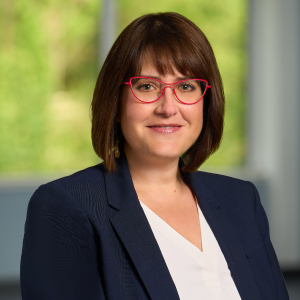
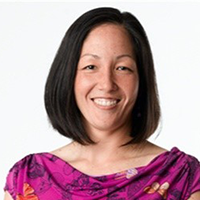
Judy Lytle, Executive Director of Evidence Development Study Solutions
Judy Lytle serves as the Executive Director of Evidence Development Study Solutions for UBC. Dr. Lytle joined UBC in 2023, bringing more than 15 years of experience in life science and healthcare strategy development, implementation, and execution. With a background in medical affairs and real-world evidence, she brings together differentiated study design and evidence generation solutions for value demonstration. She also has oversight of epidemiology, patient and physician services, scientific/clinical strategy, and medical writing teams.
Dr. Lytle holds a PhD in Neuroscience from Georgetown University as well as a Master of Biotechnology Enterprise & Entrepreneurship (MBEE) from Johns Hopkins University. A fellow of the American Association for the Advancement of Science (AAAS), and certified Project Management Professional (PMP), her approach is systematic and grounded in science.
References
- New Study Finds Psilocybin-Assisted Group Therapy to Significantly Reduce Depression https://nunm.edu/2025/08/nunm-research-finds-psilocybin-therapy-can-significantly-reduce-depression/
- Compass Pathways News. https://ir.compasspathways.com/News–Events-/news/news-details/2026/Compass-Pathways-Successfully-Achieves-Primary-Endpoint-in-Second-Phase-3-Trial-Evaluating-COMP360-Psilocybin-for-Treatment-Resistant-Depression/default.aspx
- 2024 Psychedelic Alpha interview: https://psychedelicalpha.com/news/interview-compass-pathways-ceo-kabir-nath-discusses-commercialisation-psychological-support-and-competitive-landscape
- Psychedelic Alpha article: https://psychedelicalpha.com/news/breaking-second-positive-phase-3-for-compass-psilocybin-though-modest-magnitude-raises-questions
- Default mode network: https://pubmed.ncbi.nlm.nih.gov/39020167/
- Hicks et al, 2026. Low-income group psilocybin assisted therapy for depression: An Oregon feasibility study. Journal of Psychedelic Studies, 12 Feb 2026. https://doi.org/10.1556/2054.2026.00485